

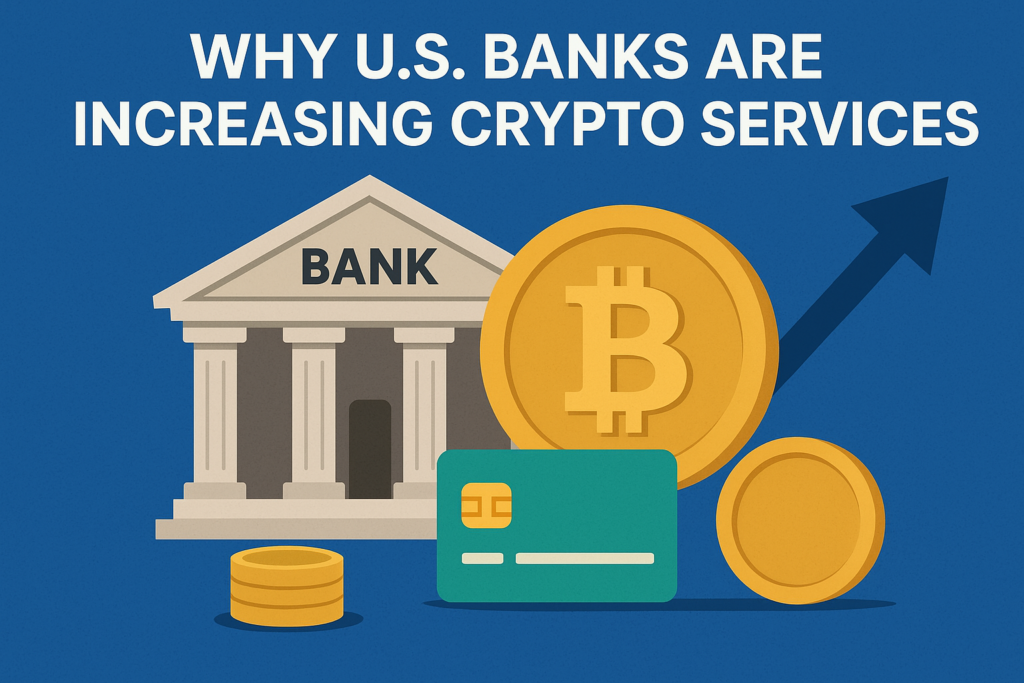
Why U.S. Banks Are Increasing Crypto Services: The Real Reasons Behind the Shift
U.S. banks are rapidly expanding crypto services as customer demand rises, regulations become clearer, and digital assets move deeper into mainstream finance. Here’s a detailed breakdown of why traditional banks are embracing Bitcoin and crypto.
🌍 Introduction
The U.S. financial landscape is going through one of its biggest transformations in decades. Traditional banks—once extremely cautious about Bitcoin and digital assets—are now moving quickly to integrate crypto into their services. What started as hesitation has now turned into competition, innovation, and new opportunities.
From Bitcoin custody to blockchain-enabled payments, U.S. banks crypto services are becoming a core part of modern banking. But why is this shift happening so rapidly? What changed? And what does it mean for everyday users?
Let’s explore the major reasons driving this move.
🔥 1. Massive and Growing Customer Demand
Customer demand is the biggest force behind the expansion of crypto services. Millions of Americans now own digital assets, and the number grows every day. People no longer want to use separate platforms for banking and crypto—they want everything in one trusted place.
Here’s what customers are asking their banks for:
- The ability to buy and sell Bitcoin instantly
- Secure storage of digital assets
- Crypto investment options
- Easier transfers between bank accounts and crypto wallets
Banks understand that ignoring this demand could mean losing long-term customers to crypto exchanges and fintech platforms. So, to stay relevant, they are offering crypto services directly inside their banking apps.
🏦 2. Clearer Regulations Encourage Banks to Join In
For years, banks avoided crypto because of regulatory uncertainty. But now, U.S. regulators have provided clearer guidelines around:
- Crypto custody rules
- Compliance and reporting
- Anti-money laundering procedures
- How banks can partner with crypto companies
This regulatory clarity gives financial institutions confidence that they can offer U.S. banks crypto services without legal risk.
Instead of operating in a grey area, banks can now launch crypto products with clear expectations from regulators.
This is one of the biggest reasons why major banks are finally entering the crypto ecosystem.
💰 3. New and Profitable Revenue Streams
Crypto is much more than an investment—it is a growing financial industry with massive earning potential. Banks have realized that offering crypto services can create new income streams, such as:
Revenue Opportunities:
- Custody fees: Storing customers’ digital assets securely
- Trading fees: Allowing users to buy/sell Bitcoin directly through banking apps
- Blockchain-based payment fees: Faster and cheaper cross-border payments
- Stablecoin transaction fees
Traditional banking profits have been declining in some areas. Crypto provides new ways for banks to grow their revenue and expand their product offerings.
🔐 4. Banks Can Offer Stronger Security Than Exchanges
Security has always been a major concern in the crypto world. Hacks, lost private keys, and insecure platforms have caused billions in losses over the years.
Banks, however, have decades of experience in:
- Security infrastructure
- Fraud prevention
- Insurance protection
- Encrypted financial systems
By offering crypto custody services, banks give customers a safer alternative to storing assets on external exchanges. This is especially appealing for new investors who may not be comfortable handling private keys or hardware wallets.
Banks are leveraging their reputation for safety to attract crypto users who want a secure and regulated environment.
⚙️ 5. Competition From FinTech and Crypto Platforms
FinTech companies like Coinbase, PayPal, Cash App, and Robinhood have exploded in popularity because they embraced crypto early. Millions of people now use these platforms for everyday transactions or investing.
Traditional banks realized that if they don’t adopt crypto services soon, they risk losing younger, tech-savvy customers.
To compete effectively, banks must offer:
- Crypto trading
- Crypto-linked debit cards
- Blockchain-powered payment solutions
- Integrated crypto investing options
The financial industry is changing, and banks know they must evolve or fall behind.
🧩 6. Crypto Payments Are Becoming More Efficient
Blockchain technology is revolutionizing the payments industry. Banks see huge potential in integrating blockchain for:
- Faster international transfers
- Lower transaction fees
- Instant settlements
- 24/7 operations instead of limited banking hours
Traditional payment systems like SWIFT are slow and expensive. Blockchain offers a faster, cheaper, and global alternative.
By adopting crypto payments, banks can modernize their infrastructure and provide better services to customers and businesses.
📊 7. Institutional Adoption Is Growing Rapidly
Large corporations, financial institutions, hedge funds, and even government organizations are now investing in Bitcoin and other digital assets. Banks want to serve these high-value clients by offering:
- Institutional-grade crypto custody
- Crypto-backed loans
- Treasury management solutions
- Digital asset investment portfolios
As big institutions move into the crypto space, banks must follow to stay competitive and relevant.
🔄 8. Banks Are Preparing for the Future of Finance
Digital assets are not just investments—they are shaping the future of financial systems. Stablecoins, tokenized assets, digital bonds, and blockchain-based settlement layers are becoming the new standard.
Banks are preparing for a future where:
- Crypto and fiat work side-by-side
- Digital wallets replace traditional accounts
- Stablecoins become common for payments
- Blockchain replaces outdated banking systems
To stay ahead, banks must integrate crypto early.
🧭 Conclusion: Traditional Banks + Crypto = The New Financial Era
The move toward U.S. banks crypto services is not a trend—it’s a long-term transformation of the financial world. From customer demand to regulatory clarity, security concerns, and competition from fintech, every factor is pushing banks into the crypto economy.
As digital assets continue evolving, banks will play a major role in making crypto mainstream, safe, and accessible for everyone.

Pingback: Why Big Banks Are Suddenly Bullish on Bitcoin - cryptolaya