

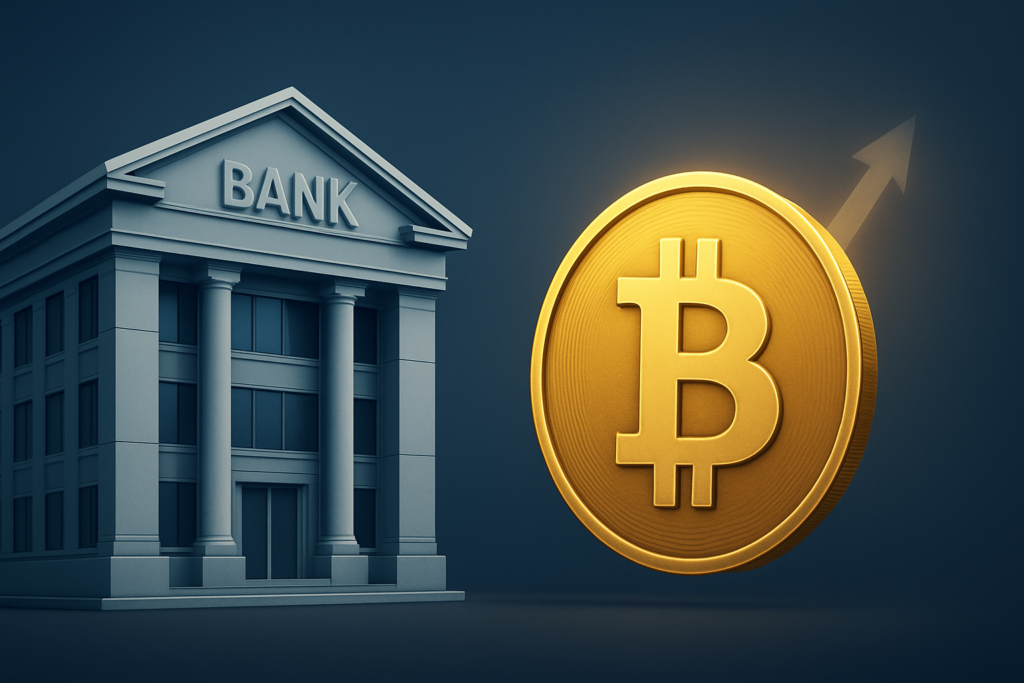
Why Big Banks Are Suddenly Bullish on Bitcoin
For years, Bitcoin was dismissed by major banks as risky, speculative, or even useless. Some executives openly criticized it, calling it a bubble or a threat to the traditional financial system. But today, the narrative has changed dramatically.
Big banks around the world are no longer ignoring Bitcoin — they are embracing it.
From recommending portfolio allocations to launching crypto services, banks are sending a clear signal: Bitcoin is no longer optional. So what changed? And why are banks suddenly bullish on Bitcoin now?
From Skepticism to Acceptance
In the early days, Bitcoin challenged the very foundation of banking. It removed intermediaries, offered self-custody, and operated without central authority. Naturally, banks resisted.
But as Bitcoin survived multiple market cycles, bans, crashes, and criticism, it proved one thing very clearly — it wasn’t going away.
Instead of disappearing, Bitcoin:
- Grew into a trillion-dollar asset class
- Attracted institutional investors
- Became widely recognized as digital gold
Banks eventually realized that fighting Bitcoin was costing them relevance.
Institutional Demand Is Exploding
One of the biggest reasons banks are now bullish on Bitcoin is client demand.
High-net-worth individuals, hedge funds, family offices, and even corporations are asking banks for Bitcoin exposure. When customers want something badly enough, banks listen.
Many institutions now see Bitcoin as:
- A hedge against inflation
- A diversification tool
- A long-term store of value
Ignoring this demand would mean losing clients to competitors who are already offering crypto services.
Regulatory Clarity Is Improving
Another major shift is regulation.
In the past, banks stayed away from Bitcoin mainly due to uncertainty. Regulations were unclear, rules differed by country, and compliance risks were high.
That landscape is slowly changing.
Governments and regulators are now:
- Creating clearer crypto frameworks
- Allowing banks to offer custody and trading
- Defining how digital assets fit into financial systems
With clearer rules, banks feel safer entering the crypto space without risking penalties or legal trouble.
Bitcoin as a Hedge Against Monetary Policy
Recent monetary policies have played a huge role in Bitcoin’s renewed appeal.
With:
- Massive money printing
- Growing government debt
- Inflation concerns
Banks are rethinking traditional financial models.
Bitcoin’s fixed supply of 21 million coins stands in sharp contrast to fiat currencies, which can be printed endlessly. This scarcity makes Bitcoin attractive as a hedge against currency debasement.
Some banks now openly acknowledge that Bitcoin offers protection in times of aggressive monetary expansion.
Competition Among Banks Is Heating Up
Once a few major banks began exploring Bitcoin, others couldn’t afford to stay behind.
No bank wants to be seen as outdated.
As competitors launch:
- Crypto trading desks
- Bitcoin ETFs and funds
- Custody and settlement services
The pressure grows. Banks that ignore Bitcoin risk losing market share, younger clients, and long-term relevance.
This competition is accelerating Bitcoin adoption faster than ever before.
Bitcoin Is Becoming a Portfolio Standard
A growing number of banks now recommend a small percentage allocation to Bitcoin.
Not as speculation — but as strategy.
Even a 1% to 5% allocation can:
- Improve risk-adjusted returns
- Reduce portfolio correlation
- Offer upside exposure to a new asset class
This shift marks a major change in mindset. Bitcoin is no longer viewed as a gamble, but as a legitimate portfolio component.
Technology and Infrastructure Are Mature Now
Earlier, Bitcoin infrastructure was clunky and risky. Custody solutions were weak, and security concerns were high.
That has changed.
Today, banks have access to:
- Institutional-grade custody
- Advanced security solutions
- Regulated exchanges and clearing systems
With safer infrastructure in place, banks are more confident offering Bitcoin services at scale.
Public Perception Has Changed
Bitcoin is no longer just for tech enthusiasts.
It’s discussed on:
- Major financial news channels
- Government panels
- Corporate earnings calls
When public perception changes, banks adapt. Being openly bullish on Bitcoin now signals innovation, not recklessness.
Final Thoughts
Big banks aren’t suddenly bullish on Bitcoin by accident. They’re responding to demand, regulation, monetary reality, and competition.
What once seemed like a threat has become an opportunity.
As banks continue integrating Bitcoin into traditional finance, one thing is becoming clear: Bitcoin has crossed the point of no return.
Whether markets rise or fall, Bitcoin is now part of the global financial conversation — and big banks know it.
Stay Connected with Cryptolaya
Enjoyed this article? For daily crypto updates, market insights, crypto news and crypto blogs.make sure to follow us on social media. Join our growing community and never miss the latest trends!
Follow Cryptolaya on:
• facebook
Let’s grow and learn crypto together!
You may also like below articles

Pingback: Russia’s Banking Giant Signals Bitcoin Shift as Institutional Crypto Interest Grows
Pingback: Fed to Start $45B QE ,Why This Liquidity Surge Is Bullish for Crypto
Pingback: Global Liquidity Is Turning — Why Crypto Markets Are Paying Attention