

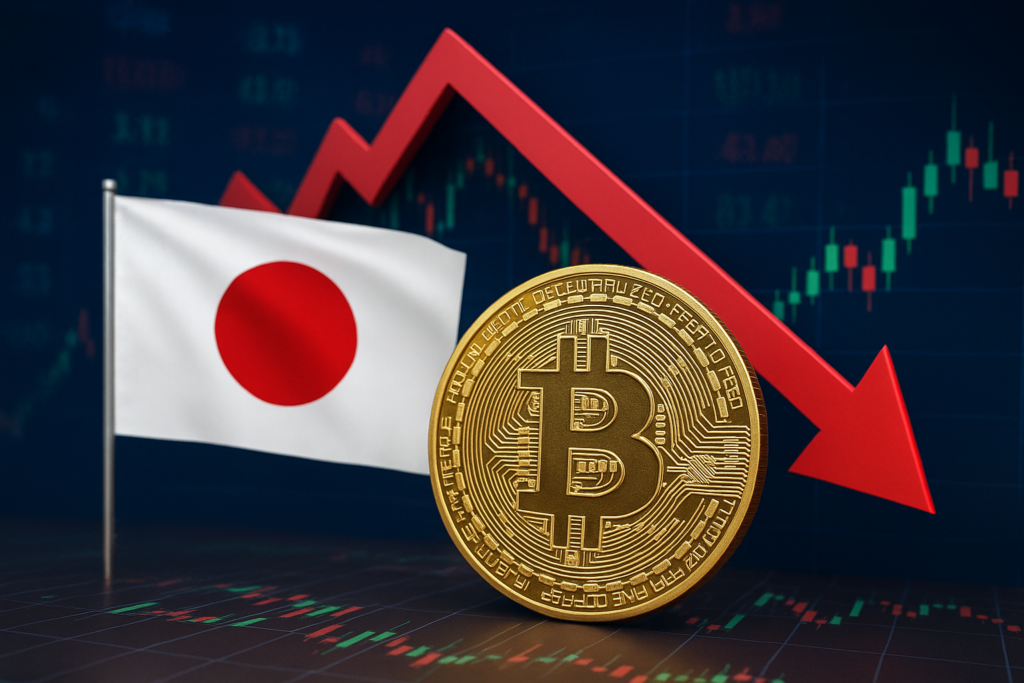
BANK OF JAPAN signals A MAJOR POLICY SHIFT
The Bank of Japan (BOJ) is reportedly considering the sale of its massive exchange-traded fund (ETF) holdings as early as January, a move that could mark the beginning of an unprecedented exit from nearly ¥83 trillion ($534 billion) in assets.
If confirmed, this would represent one of the most significant shifts in Japan’s monetary policy in decades — and markets are already reacting to the signal, not the sale itself.
The BOJ accumulated these ETF holdings during years of aggressive stimulus aimed at fighting deflation and stabilizing markets. Today, the central bank has become one of Japan’s largest equity holders — a position many investors have long viewed as unsustainable.
WHY GLOBAL LIQUIDITY MATTERS FOR CRYPTO MARKETS
Central bank balance sheets remain a key driver of global liquidity. When liquidity expands, investors typically move into risk assets like stocks and cryptocurrencies. When liquidity tightens, volatility often follows.
Even though any BOJ ETF sales would likely be slow and carefully managed, the signal of policy normalization matters. For crypto markets, which have already shown sensitivity to macro headlines this year, the timing is especially important.
WHY BITCOIN TRADERS ARE PAYING CLOSE ATTENTION
Bitcoin has increasingly behaved like a macro-sensitive asset, reacting to shifts in interest-rate expectations and central-bank messaging. Traders are watching the BOJ closely because Japan’s potential exit could align with broader global efforts to unwind stimulus-era policies.
In the short term, reduced liquidity could pressure risk assets. Over the long term, however, some Bitcoin holders argue that less central-bank market support strengthens Bitcoin’s appeal as a scarce, decentralized alternative.
POTENTIAL MARKET IMPACT BEYOND JAPAN
The implications of a BOJ ETF exit extend far beyond Japanese equities. Global markets — including U.S. stocks and cryptocurrencies — could experience ripple effects as investors reassess risk exposure.
History shows that even subtle central-bank signals can influence sentiment across borders, particularly when markets are already positioned cautiously.
WHAT TO WATCH NEXT
While the BOJ has not officially confirmed the timing or scale of ETF sales, January is shaping up as a critical window. Any guidance or confirmation could act as a catalyst for Bitcoin volatility and broader crypto market moves.
As central banks continue stepping away from stimulus-era policies, Bitcoin remains at the intersection of macroeconomics and digital finance — making the Bank of Japan’s next move one that traders cannot afford to ignore.
Stay Connected with Cryptolaya
Enjoyed this article? For daily crypto updates, market insights, crypto news and crypto blogs.make sure to follow us on social media. Join our growing community and never miss the latest trends!
Follow Cryptolaya on:
• facebook
Let’s grow and learn crypto together!
You may also like below articles
Pingback: Fed Injects $16 Billion Into Markets — Liquidity Is Flowing Again - cryptolaya
Pingback: Bitcoin Whales Accumulate $2B in BTC Ahead of Trump Speech - cryptolaya
Pingback: Japan’s Policy Shift: How a 0.75% BoJ Rate Hike Could Rock Global Markets - cryptolaya
Pingback: Is There an AI Bubble? Robert Kiyosaki Shares His Market Crash Concerns - cryptolaya
Pingback: Crypto Liquidity Explained:Why It Matters for Bitcoin Prices
Pingback: Today’s Market Schedule Signals Extreme Volatility as Key Data Drops - cryptolaya